We use our own and third-party cookies to collect information to improve our services and analyze your browsing habits. If you continue browsing, it implies the acceptance of their installation. You can configure your browser to prevent their installation.
Required cookies
Always active
These cookies are strictly necessary for the operation of the site, you can disable them by changing the settings of your browser but you will not be able to use the site normally.
Cookies used
Functional cookies
These cookies provide necessary information to applications of the website itself or integrated by third parties, if you disable them you may find some problems in the operation of the page.
Cookies used
Performance cookies
These cookies are used to analyze the traffic and behavior of customers on the site, help us understand and understand how you interact with the site in order to improve performance.
Cookies used
Guided cookies
These cookies can be from the site itself or from third parties, they help us to create a profile of your interests and to offer you advertising aimed at your preferences and interests.
Cookies used
The user is informed that they have the option to configure their browser so as to be notified of the receipt of cookies, and if they wish, to prevent their installation on their hard drive.
Below we provide the links for different browsers, through which you can perform this configuration:
Glass fiber has roughly comparable mechanical properties to other fibers such as polymers and carbon fibre. Although not as strong or as rigid as carbon fiber, it is much cheaper and significantly less brittle when used in composites. Glass fibers are therefore used as a reinforcing material for many polymer products; to form a very strong and relatively lightweight fibre-reinforced (FRP) composite material called glass-reinforced plastic (GRP), also popularly known as "fiberglass". This structural material product contains little or no air or gas, is more dense, and is a much poorer thermal insulator than is glass wool.
Lightweight 30g/m2 C (chemical) glass surface veil with a soluble emulsion binder for hand-layup processes.
Our glass surface veil is suitable for a broad range of applications and is ideal for use in composites. The material offers an extensive range of properties including corrosion resistance, high thermal stability, excellent resin uptake, dielectric...
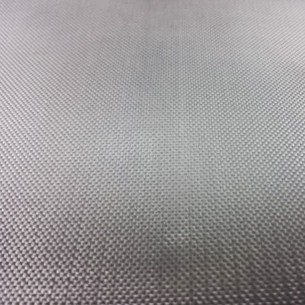
Woven glass fabric ideal for laminations with polyester or vinylester resins. Especially used for large components as high performance structural reinforcement. Very used in the manufacture of general composite parts and tool applications. Roll Width: 125 cm.
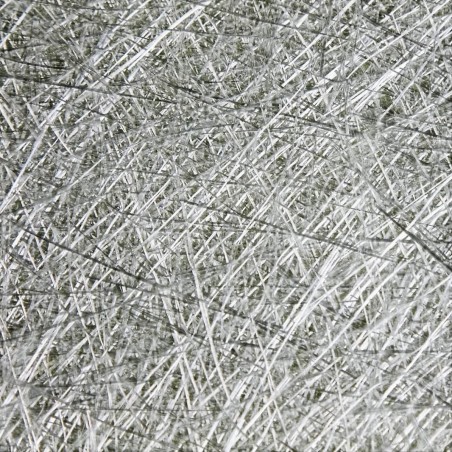
150 g/m2 light weight E glass Chopped Strand Mat (CSM) is made from E-glass low size chopped strands held together by an emulsion binder which makes it perfectly suitable for use with polyester, vinyl ester and urethane-acrylate resins. The basic strand has a sizing system containing a silane coupling agent.
Woven glass fabric ideal for laminations with polyester or vinylester resins. Especially used for large components as high performance structural reinforcement. Very used in the manufacture of general composite parts and tool applications. Roll Width: 125 cm.
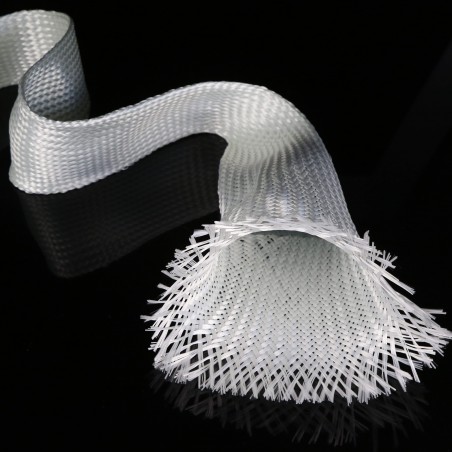
170 gsm plain weave glass fabric tape with a 25 mm width. Suitable for local structural reinforcement using thermosetting resins: polyester, urethane-acrylate, vinyl ester or epoxy.
450 g/m2 E glass Chopped Strand Mat (CSM) is made from E-glass chopped strands held together by an emulsion binder which makes it perfectly suitable for use with polyester, vinyl ester and urethane-acrylate resins. The basic strand has a sizing system containing a silane coupling agent.
600 g/m2 E glass Chopped Strand Mat (CSM) is made from E-glass chopped strands held together by an emulsion binder which makes it perfectly suitable for use with polyester, vinyl ester and urethane-acrylate resins. The basic strand has a sizing system containing a silane coupling agent.
Powder glass chopped strand mat used to prevent osmosis issues in marine applications. It is recommended in combination with isophthalic polyester and vinyl ester resins.
Plain weave glass fabric tape of 300 g/m2, 5 cm wide. Ideal for local structural reinforcement using thermosetting resins: polyester, urethane-acrylate, vinyl ester or epoxy.
High quality aesthetic silionne glass tape for high quality applications. Excellent drapability even in complex angles and great transparency once impregnated with clear resins. Compatible with all types of thermosetting resins: epoxy, urethane-acrylate, polyester and vinyl ester.
Glass fibre complex ideal for laminations with polyester, urethane-acrylate or vinyl ester resins. Made with a 3x1 twill glass fabric of 500 g/m2 stitched to a chopped strand mat of 450 g/m2. Especially used for the production of large components where high resistance is a must. Very used in general composite parts and marine applications.
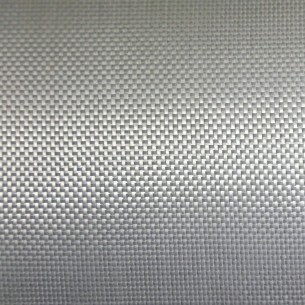
Glass fabric ideal for manufacturing composite parts or moulds with any type of thermosetting resin: polyester, vinyl ester, epoxy, urethane-acrylate (Crestapol), etc. Roll width: 100 cm
225 g/m2 light weight E glass Chopped Strand Mat (CSM) is made from E-glass low size chopped strands held together by an emulsion binder which makes it perfectly suitable for use with polyester, vinyl ester and urethane-acrylate resins. The basic strand has a sizing system containing a silane coupling agent.
Glass fabric ideal for manufacturing composite parts or moulds with any type of thermosetting resin: polyester, vinyl ester, epoxy, urethane-acrylate (Crestapol), etc. Roll width: 100 cm.
Glass fabric ideal for manufacturing composite parts or moulds with any type of thermosetting resin: polyester, vinyl ester, epoxy, urethane-acrylate (Crestapol), etc.Roll width: 100 cm
Triaxial glass fabric of 609 g/m2 built of three layers of unidirectional fabric oriented at 0º, +45º and -45º respectively. Extensively used for han lay-up, injection or infusion and RTM. Suitable for any type of thermosetting resin like polyester, urethane-acrylate, vinyl ester or epoxy.
Unidirectional glass fabric of 600 g/m2 ideal for manufacturing structural laminates with epoxy, polyester, urethane-acrylate or vinyl ester resins.
Recommended for hand lay-up, infusion and RTM processes.
Biaxial glass fabric of 800 /m2 built of two layers of unidirectional fabric oriented at +45º and -45º respectively. Extensively used for han lay-up, injection or infusion and RTM . Suitable for any type of thermosetting resin like polyester, urethane-acrylate, vinyl ester or epoxy.
Biaxial glass fabric built of two layers of unidirectional fabric oriented at +45º and -45º respectively. Extensively used for han lay-up, injection or infusion and RTM . Suitable for any type of thermosetting resin like polyester, urethane-acrylate, vinyl ester or epoxy. Widely used for processes where a very good mechanical strength combined with...
Glass fabric ideal for manufacturing composite parts or moulds with any type of thermosetting resin: polyester, vinyl ester, epoxy, urethane-acrylate (Crestapol), etc.Roll width: 100 cm