 Cookie preferences



 Español
 Français
 Deutsch
 Italiano
 Português
Shopping Cart
Part and exposure
Distinguish a hull, deck and auxiliary component: loads and water contact change laminate requirements.
Composites and marine / Hulls · parts · marine structures
Before buying materials for a boat or marine part, define the laminating process, water exposure and expected loads. Distinguish the surface, first layer and structure; the following options serve different roles and must form a compatible system.
View selected materials ↓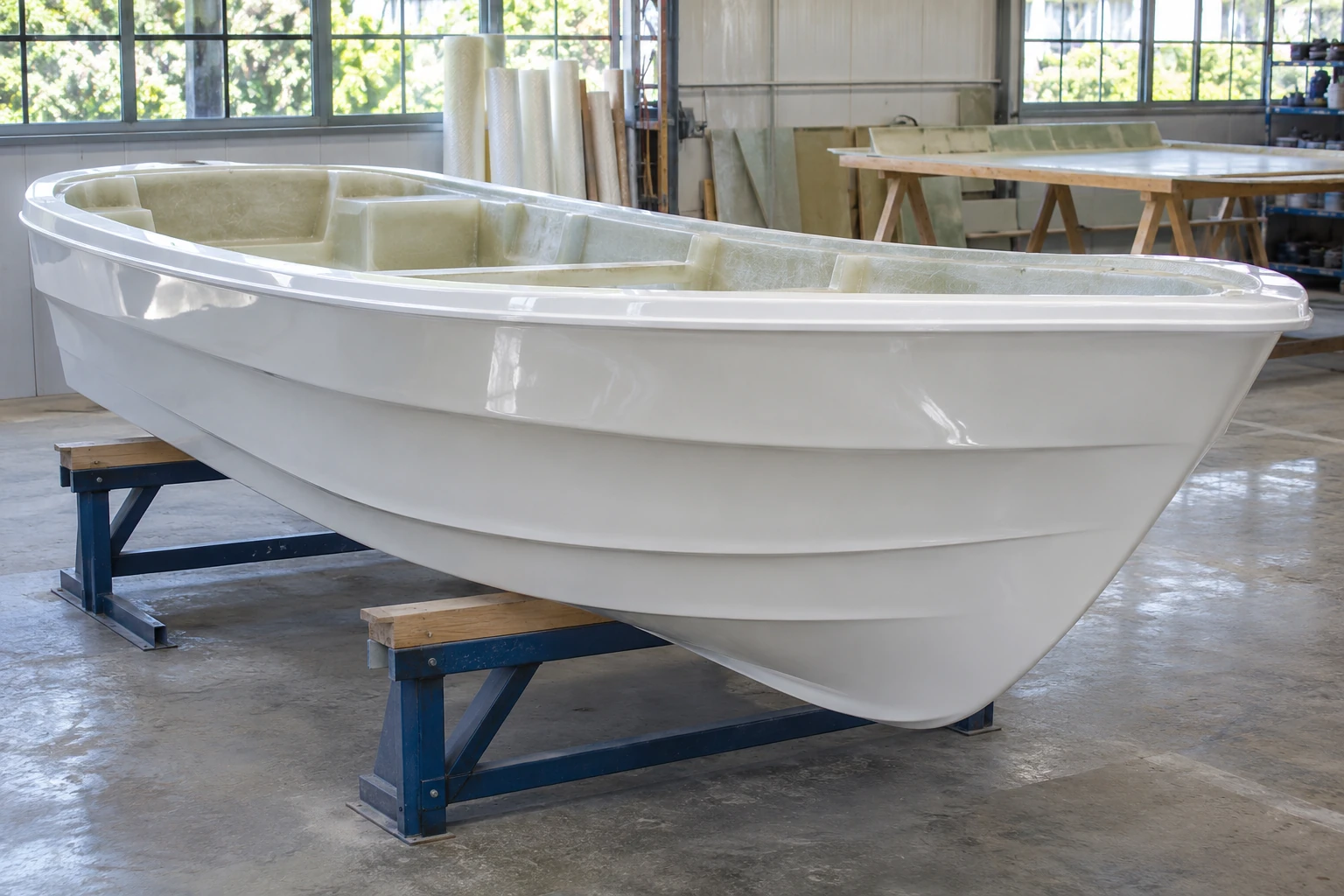
Before you buy
Distinguish a hull, deck and auxiliary component: loads and water contact change laminate requirements.
Resin wets out the reinforcement. The gelcoat, joints and other layers must suit the structure and manufacturing method.
Water resistance and mechanical performance depend on curing. If the project requires marine inspection, verify the approval of the system used.
What to buy for this project
Compare their purpose and conditions of use.
Check sizes and options on each product page.
Gelcoat applied to the mould before laminating begins.

Gelcoat · in-mould marine surface
White Crystic GT-600 for forming the surface of marine parts by brush application to the mould.
Apply an even film to the mould and wait for the appropriate cure stage. The first laminate layer must be applied within 24 hours of gelcoat application. Coating a finished part requires the appropriate formulation and process.
An intermediate layer between gelcoat and structure.

Skincoat · first laminate layer
Crystic VE679 PA for the first laminate layer in marine construction, helping reduce pores and reinforcement print-through.
Acts as an intermediate layer between the surface and the rest of the laminate. Define compatibility with the gelcoat and structural resin and organise each layer's application time.
Options for wetting out reinforcement in hulls and marine parts.

Isophthalic polyester · marine laminating
Crystic 489 PABTLV for making glass-fibre hulls and marine structures by hand lay-up or spray-up.
Plan a post-cure for the best long-term water resistance. For a vessel subject to inspection, confirm construction requirements and the approval applicable to the project.

Vinyl ester · marine parts
Vinyl ester ACT for making marine parts by hand lay-up or spray-up, with good hydrolysis resistance.
Thixotropy helps retain resin on sloping surfaces. Design the laminate and cure for the part: the thermal values in the data sheet are obtained with post-curing.

Vinyl ester · marine laminates
Crystic VE 677 PA for composite marine parts made by contact moulding, spray-up or filament winding.
Test the intended laminate first. For optimum performance and long-term stability, allow a post-cure cycle adapted to thickness and service temperature.
Epoxy systems for marine parts manufactured in closed moulds.

Epoxy · large structures by infusion
Resoltech 1800 for wetting out reinforcement in large marine structures by infusion or injection.
Allow for external infusion mesh or permeable or grooved and perforated cores to distribute the resin, and use dry reinforcements. The part requires heat curing before demoulding. Design and validate the laminate for its structural role.

Epoxy · marine parts by RTM and SCRIMP
Castropox 1233 for composite marine parts made by RTM injection or SCRIMP infusion.
The process requires heat curing; the data sheet uses 6 hours at 70 °C as a reference condition. Define reinforcement, flow and thicknesses according to the part's function.

Epoxy · foils and lightweight boats
Resoltech 1080S for composite foils, kayaks and lightweight boats where high stiffness and low weight are required. Supports hand lay-up, infusion and injection.
Plan post-curing if you need the thermal and mechanical performance in the data sheet. When adding layers to a cured laminate without peel ply, sand, clean and degrease before continuing.
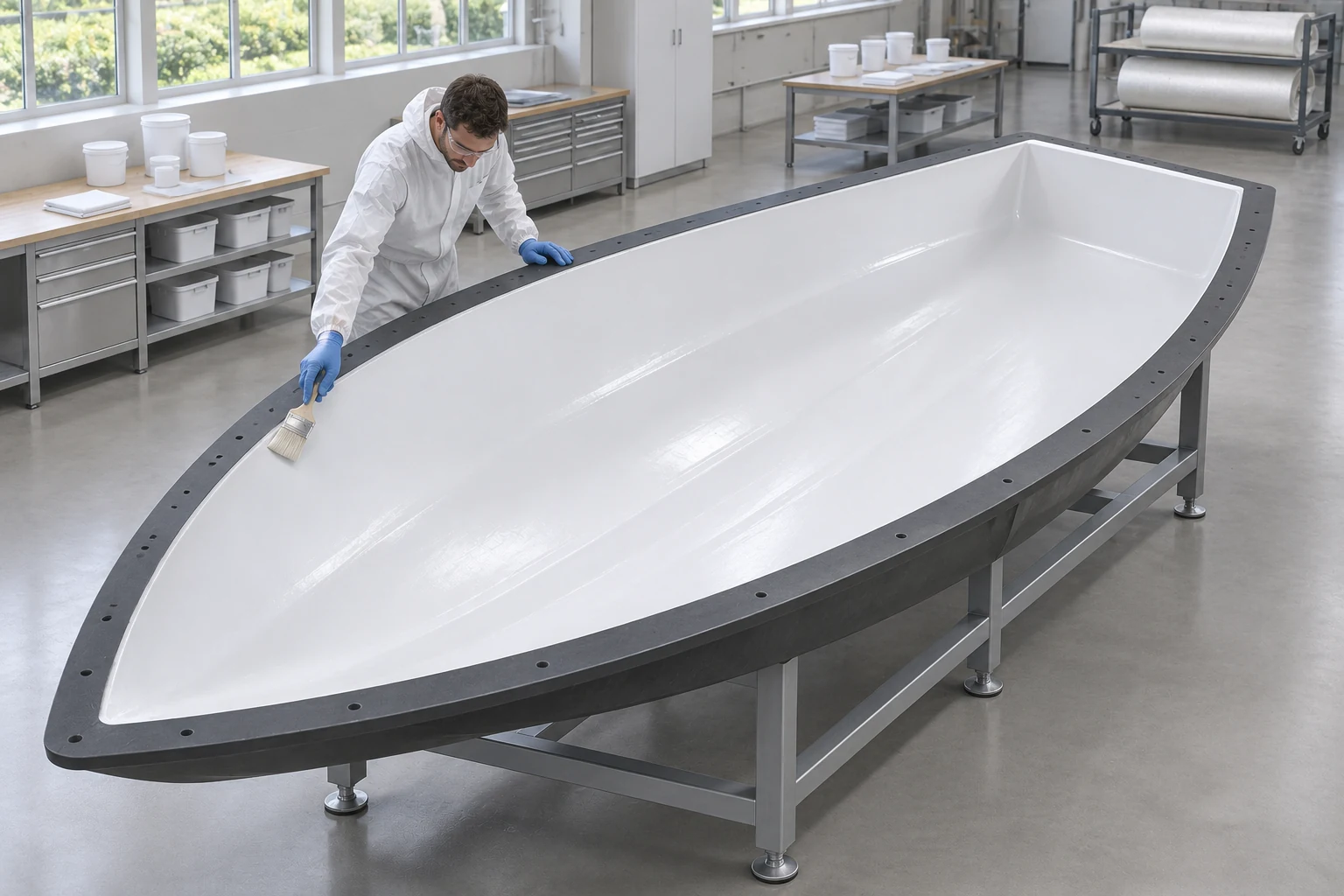
Gelcoat for finishing moulded parts, applied by brush before laminating.
1 material · View application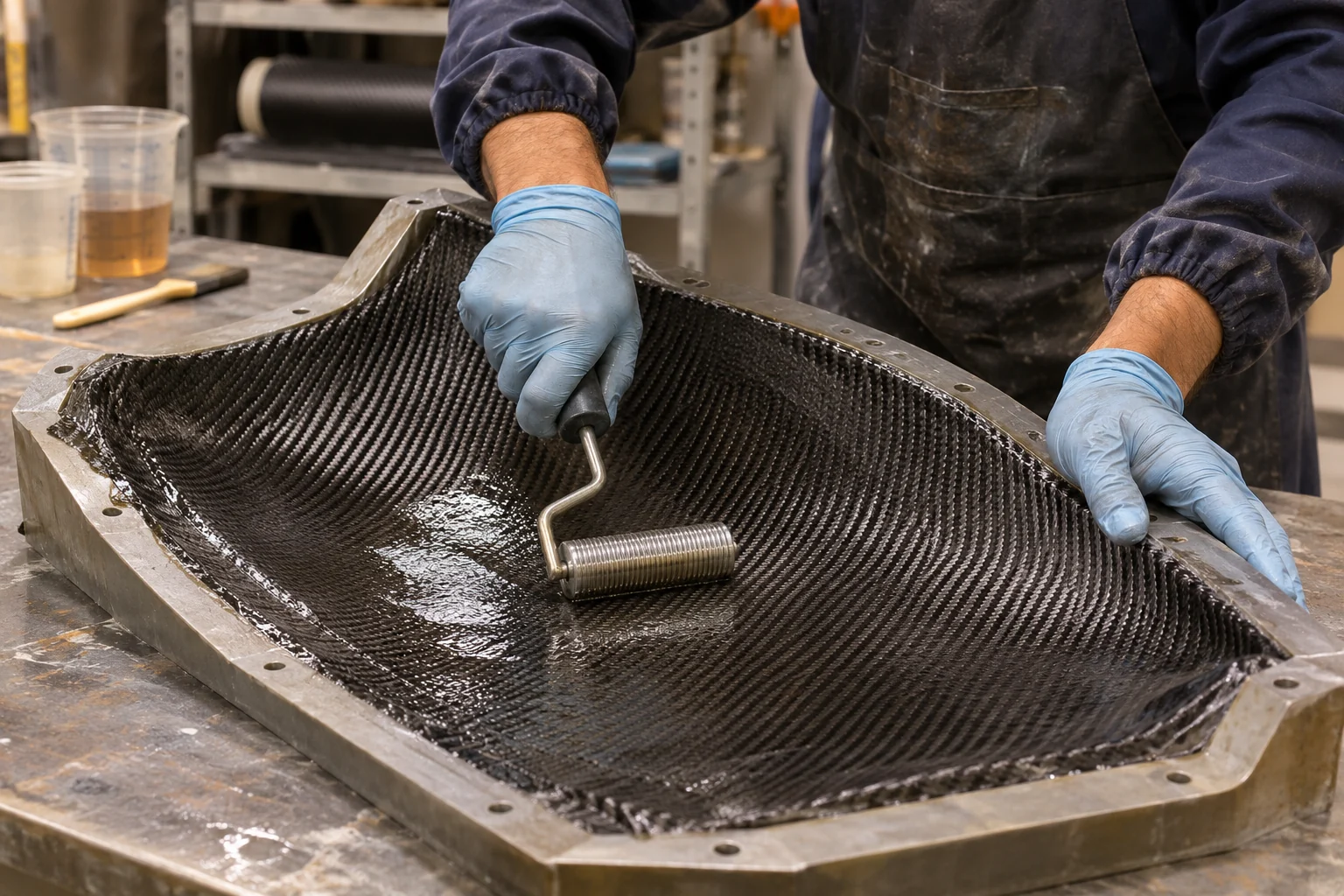
Epoxy, polyester and vinyl ester resins for making fibre-reinforced parts by hand lay-up or spray-up.
17 materials · View application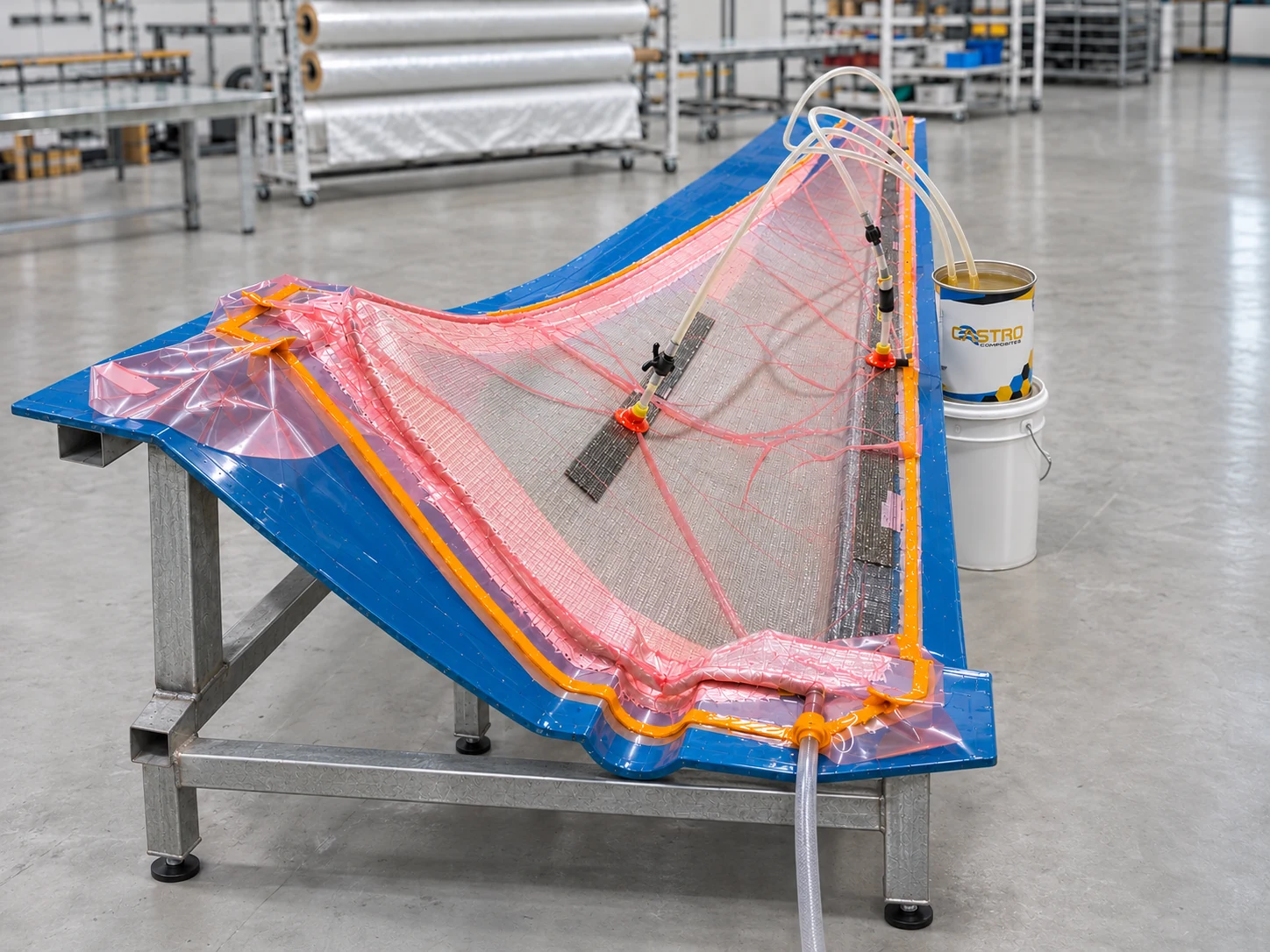
Resins for infusion and injection of composite parts, with options for different processes and service conditions.
11 materials · View applicationTell us about the process, materials and working conditions.
