 Cookie preferences



 Español
 Français
 Deutsch
 Italiano
 Português
Shopping Cart
Reinforcement and process
Define the fabric or mat and whether you will use hand lay-up or spray-up equipment. The resin must wet out that reinforcement and remain in place on the part's geometry.
Composites and marine / Glass · carbon · aramid
When buying resin for a fibre-reinforced part, define the reinforcement, process and service conditions. Compare hand lay-up and spray-up options, distinguishing the resin that wets out the reinforcement from the gelcoat that forms the surface.
View selected materials ↓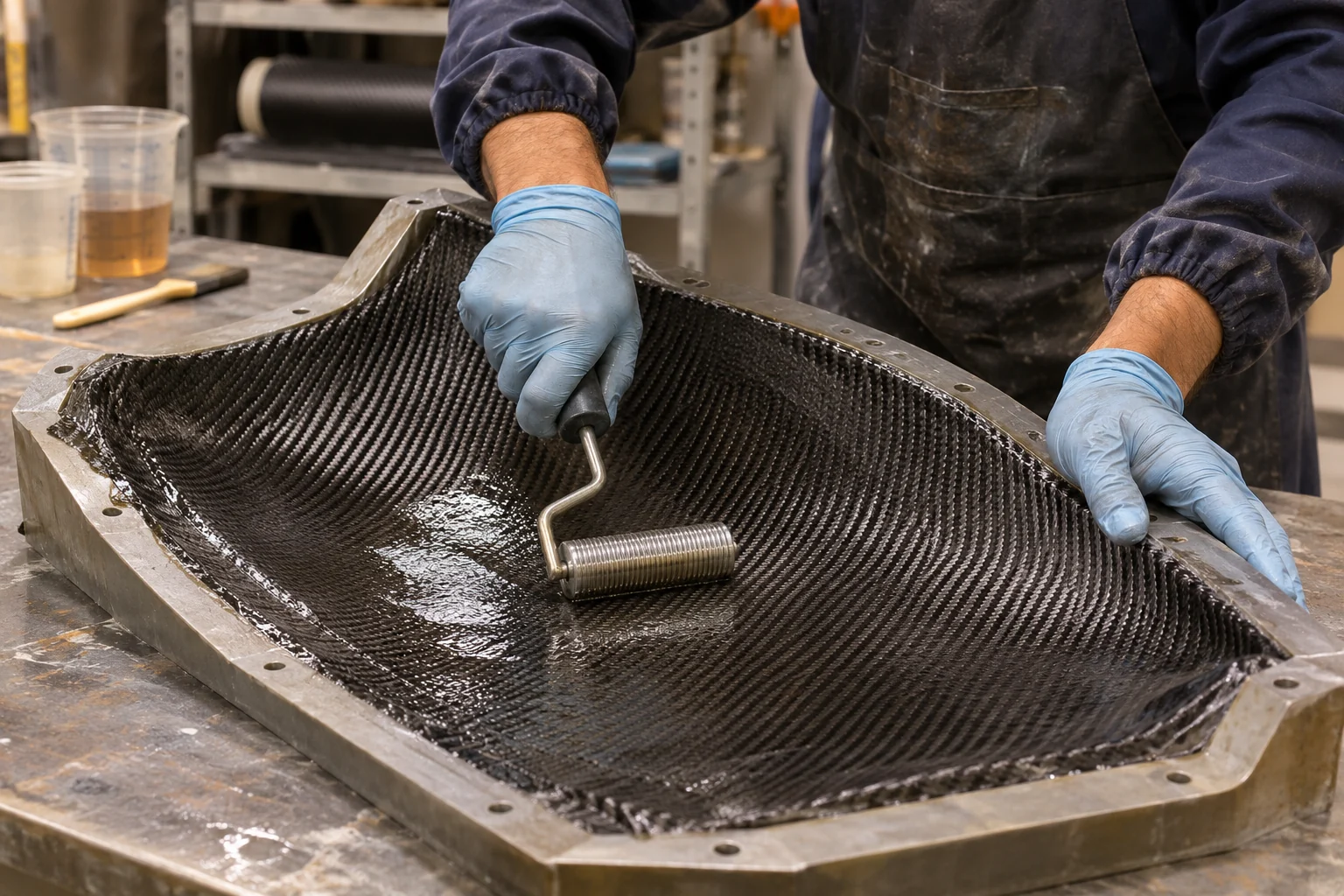
Before you buy
Define the fabric or mat and whether you will use hand lay-up or spray-up equipment. The resin must wet out that reinforcement and remain in place on the part's geometry.
Calculate the time needed to place and consolidate the layers. Workshop temperature and mixed quantity affect the available time.
Distinguish a decorative part from a structure or a part exposed to heat. Check whether you can provide the cure required for its intended service.
What to buy for this project
Compare their purpose and conditions of use.
Check sizes and options on each product page.
Reinforcement wet-out, clear laminates and vertical surfaces, depending on the system.
Epoxy · reinforcement laminating
Resoltech 1050 for hand laminating structures with glass, carbon, aramid and basalt reinforcements.
Allows demoulding without post-curing; achieving maximum thermal and mechanical performance requires a heating cycle. Define the reinforcement and laminate structure for the loads the part will carry.

Epoxy for stiff, lightweight parts
1080S resin for hand laminating high-modulus parts, including sports equipment.
Demoulding is possible after room-temperature curing. If the part needs the maximum thermal and mechanical properties in the data sheet, allow for post-curing and suitable heating equipment.
Epoxy · clear laminate
1070 ECO for laminating reinforcements while retaining their appearance and obtaining high-gloss clear surfaces.
For a clear glass laminate, use fabric with a compatible treatment: clarity does not depend on the resin alone. On cured layers without peel ply, sand, clean and degrease before continuing.
Thixotropic epoxy · vertical surfaces
1020T reduces sagging when laminating vertical or overhead surfaces with glass or carbon fibre.
Prepare and clean the substrate before laminating. The thixotropic version helps with vertical lay-up, but reinforcement thickness and distribution must suit the part.
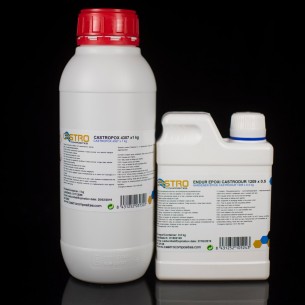
Epoxy · general-purpose laminates
Castropox 4307/1209 for wetting out glass, carbon or aramid and making general-purpose laminates.
Laminate on surfaces free from rust, grease and oil, above 10 °C. Organise quantities and working area so the mix is used before it gels.
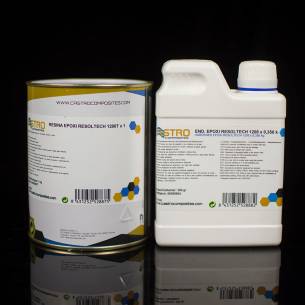
Structural epoxy · laminating and consolidation
Resoltech 1200 for making composite parts and structures by hand lay-up, vacuum consolidation or filament winding.
Allows demoulding after room-temperature curing. If the part requires improved thermal and mechanical performance, allow equipment and time for the 60–80 °C post-cure specified for the system.
Options for glass-fibre parts; each reference specifies its process and application range.

Polyester for glass fibre
R115PA resin for general-purpose glass-fibre laminates made by hand lay-up or spray-up.
Plan a glass-fibre-reinforced laminate and a curing temperature of at least 15 °C. If adding pigments or fillers, assess their effect before manufacturing the part.

Polyester · general-purpose laminates
Polyester resin for general-purpose laminates with glass-fibre mat or fabric. The commercial reference is supplied pigmented white.
The choice depends on the part's use: for demanding mechanical, thermal or chemical performance, compare specific alternatives. Pigment does not make this a clear finishing resin.
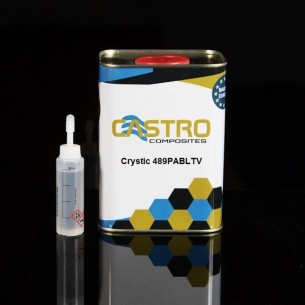
Isophthalic polyester · marine laminating
Crystic 489 PABTLV for making glass-fibre hulls and marine structures by hand lay-up or spray-up.
Plan a post-cure for the best long-term water resistance. For a vessel subject to inspection, confirm construction requirements and the approval applicable to the project.
Vinyl ester · marine parts
Vinyl ester ACT for making marine parts by hand lay-up or spray-up, with good hydrolysis resistance.
Thixotropy helps retain resin on sloping surfaces. Design the laminate and cure for the part: the thermal values in the data sheet are obtained with post-curing.
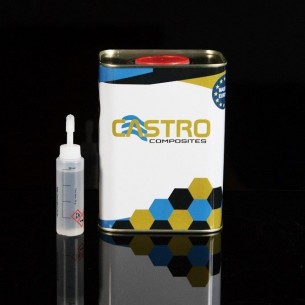
Vinyl ester · marine laminates
Crystic VE 677 PA for composite marine parts made by contact moulding, spray-up or filament winding.
Test the intended laminate first. For optimum performance and long-term stability, allow a post-cure cycle adapted to thickness and service temperature.
Polyester · glass-fibre lay-up and spray-up
Polyester resin for making glass-fibre parts by hand lay-up or spray-up, with good reinforcement wet-out and sag resistance.
Its reactivity is designed for colder working periods. If the final layer is exposed to air, allow for a suitable additive, such as a paraffin solution, to obtain a tack-free surface.
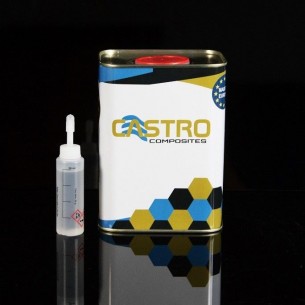
Polyester · general-purpose parts
Resin for general-purpose parts where mechanical and chemical resistance are not determining requirements.
A blend of batches from different polyester families. Reserve it for work without specific structural or chemical requirements and assess the behaviour of the supply you will use.
Resins for use with simultaneous spray-up equipment.
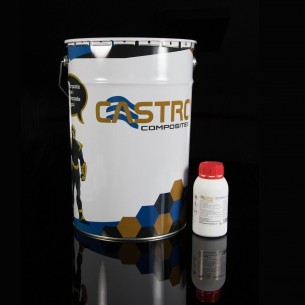
Polyester · hand lay-up and spray-up
2-446PALV resin for glass-fibre parts made by hand lay-up or spray-up, with rapid wet-out and low exotherm.
Spray-up requires suitable equipment. Condition the mould, resin and workshop before starting and plan application around PALV's gel time.
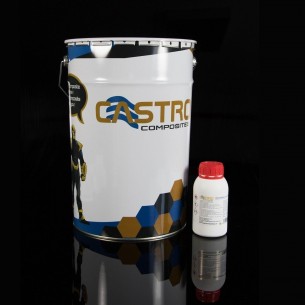
Polyester · hand lay-up and spray-up
2-446MPALV variant for glass-fibre parts made by hand lay-up or spray-up, with a longer gel time than 2-446PALV under the compared conditions.
Spray-up requires suitable equipment. Plan application around the working time at the actual workshop temperature; MPALV has a longer gel time than PALV under the compared conditions.
The choice depends on the complete system and the test required by the project.
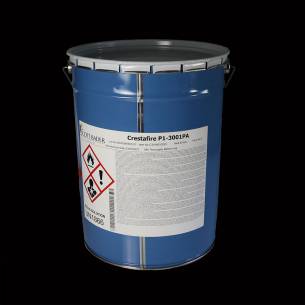
ATH-filled polyester · contact moulding
Crestafire P1-3001PA for laminates with fire and smoke requirements in railway, public transport and construction applications.
For the reference system with GCS1001E PA gelcoat, validate the complete laminate: reinforcement, thickness, finish and cure. The fire classification does not transfer to any part. This gelcoat is spray-applied and intended to be painted afterwards.
Crestafire GCS1001E PA: Spray gelcoat for the reference fire and smoke system with P1-3001PA. The complete part and its finish must be validated.
Gelcoat applied to the mould before laminating the part.
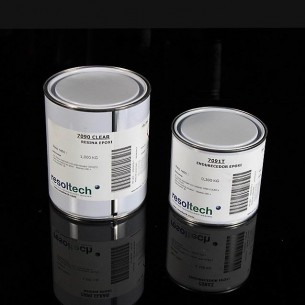
In-mould gelcoat · exposed carbon
Colourless 7090/7091 forms the surface layer of exposed-carbon parts manufactured in a mould.
Applied before laminating. An excessively thick film can lose transparency; control thickness and allow for the heat cure needed to demould and complete the part.
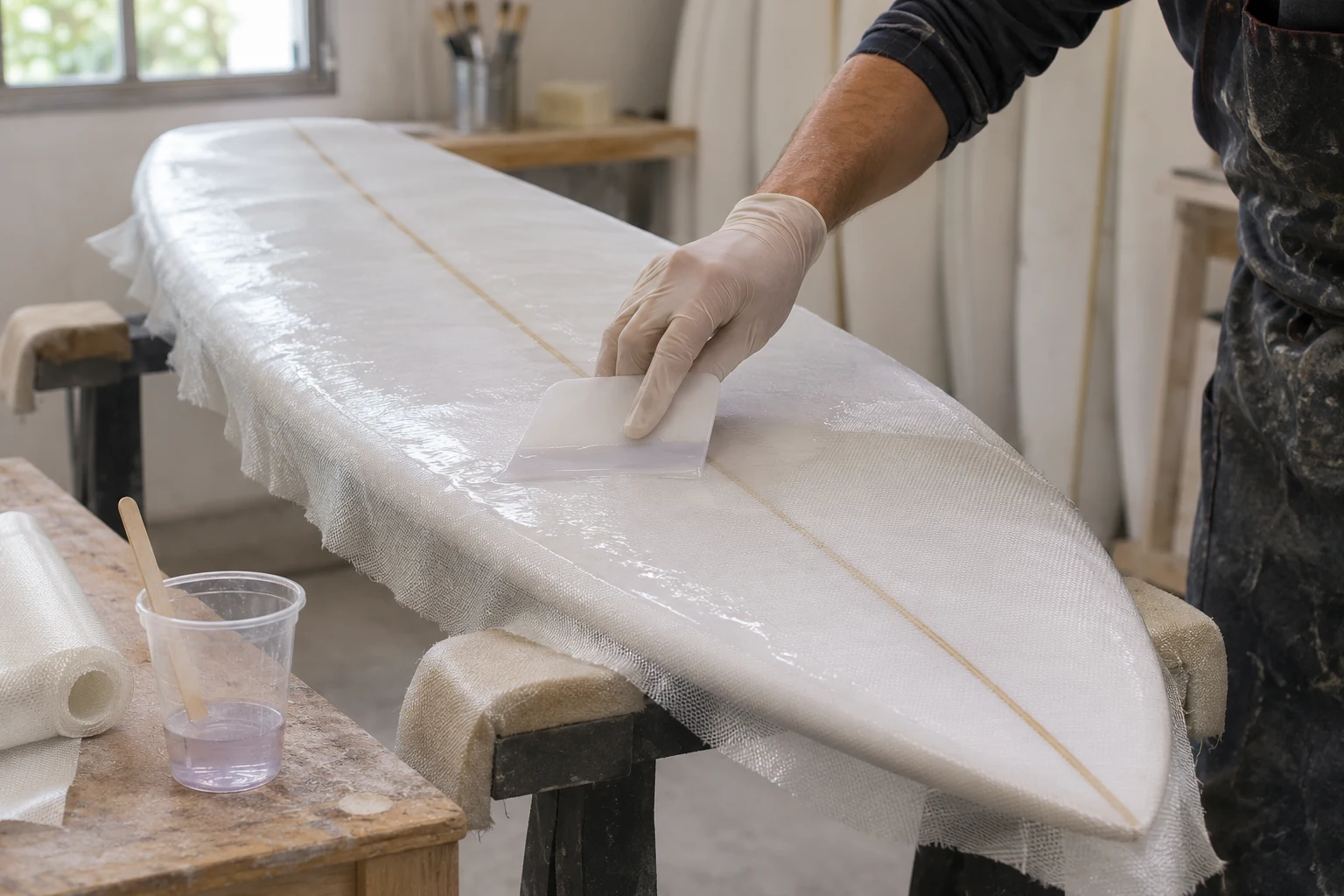
Resins for laminating boards with fibre reinforcement while retaining a clear finish over the core.
2 materials · View application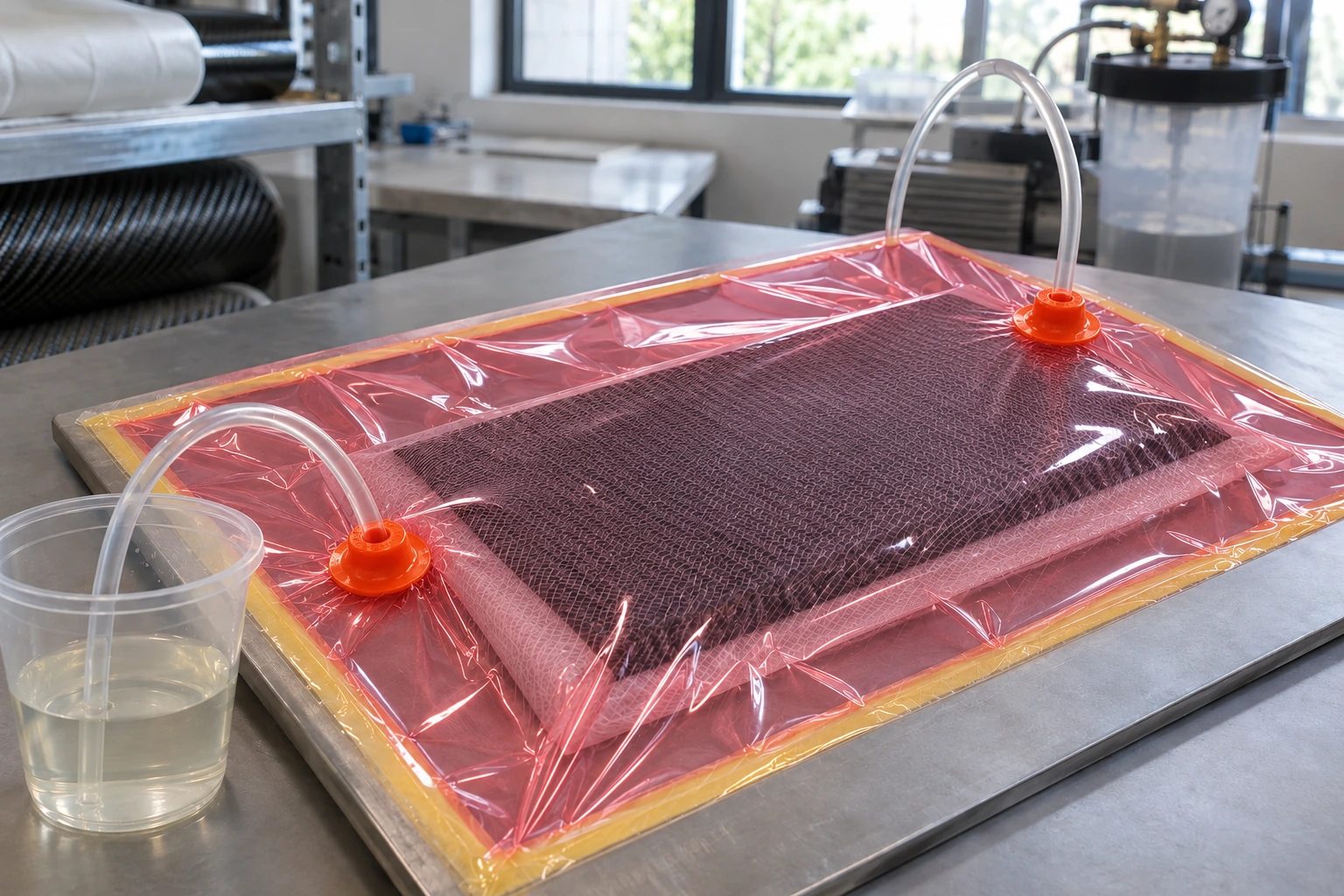
Resins for infusion and injection of composite parts, with options for different processes and service conditions.
11 materials · View application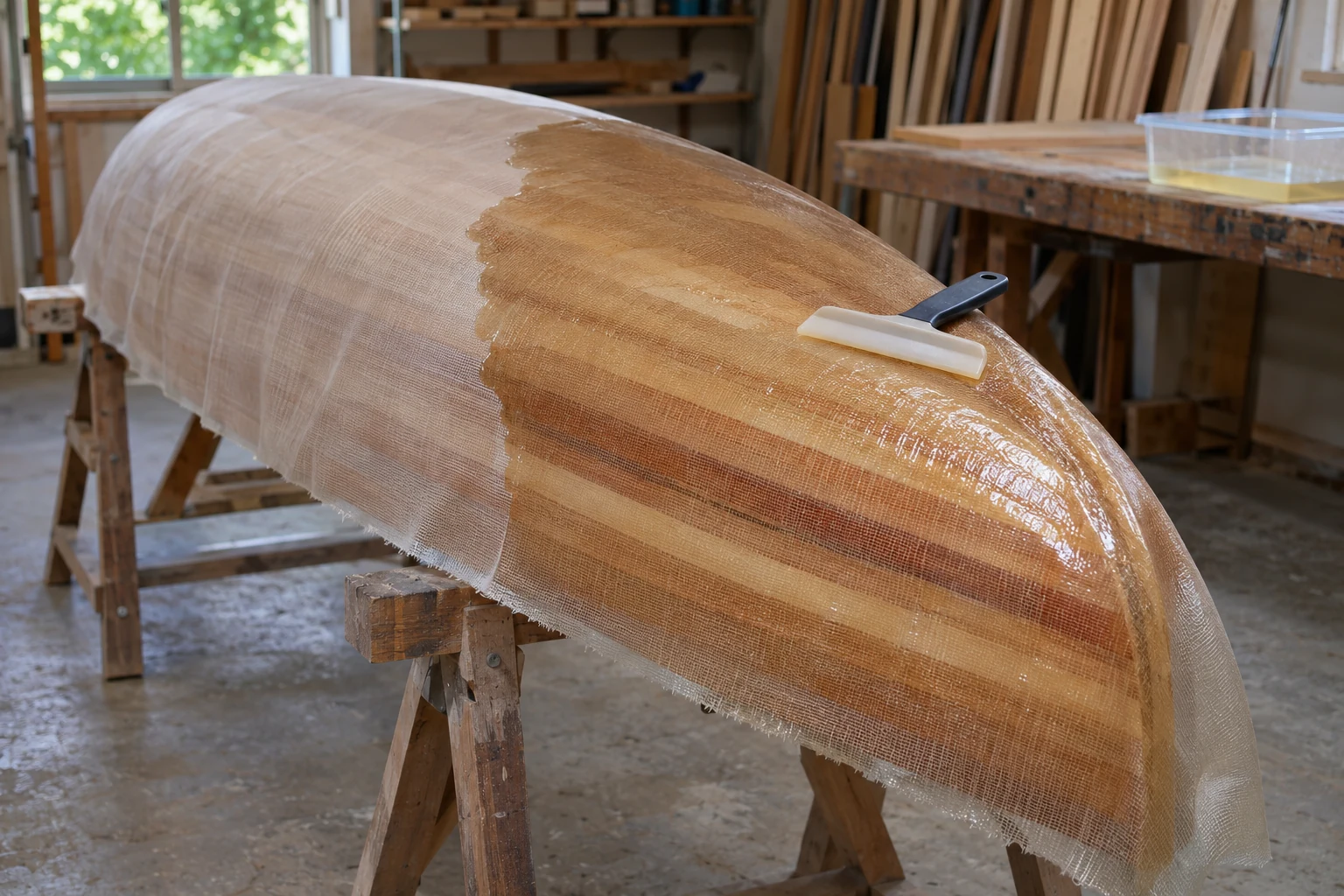
Epoxy systems for laminating, coating and bonding wood with suitable reinforcement and fillers.
3 materials · View applicationTell us about the process, materials and working conditions.
