 Cookie preferences



 Español
 Français
 Deutsch
 Italiano
 Português
Shopping Cart
Role in the mould
The gelcoat forms the surface; the skincoat is an intermediate layer and the backing resin wets out the reinforcement in the mould body. Choose each material for its role.
Moulds and replicas / Tooling · glass fibre
When buying materials for a mould, distinguish the surface, the first laminate layer and the backing. Here you will find options supported by documentation for each function and process, as well as cast tooling. This selection is not a kit: compatibility of the complete system must be confirmed.
View selected materials ↓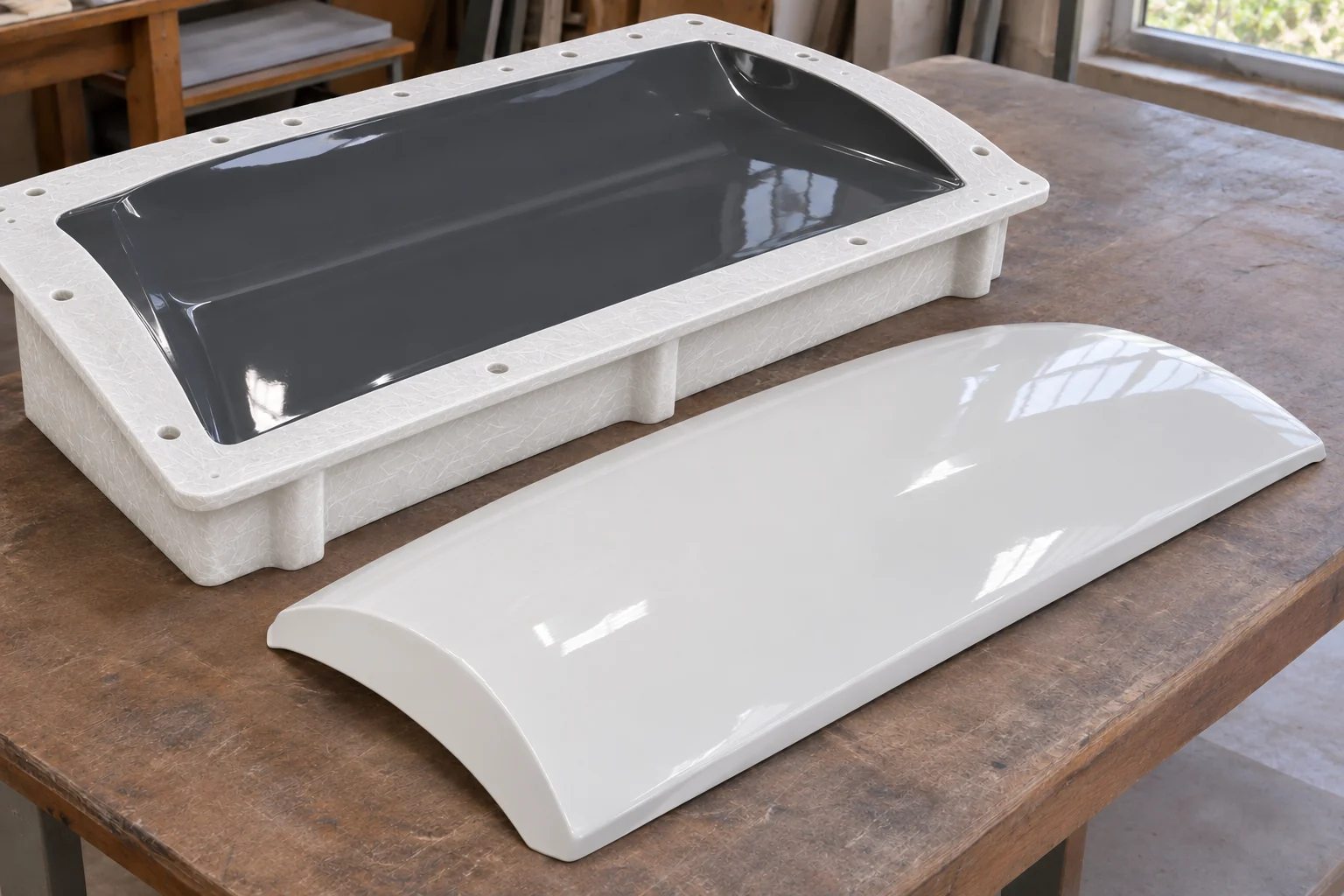
Before you buy
The gelcoat forms the surface; the skincoat is an intermediate layer and the backing resin wets out the reinforcement in the mould body. Choose each material for its role.
Choose between hand lay-up, infusion and casting. A material suitable for moulds is not necessarily suitable for every process.
The gelcoat, backing, reinforcements and release agent must be compatible and withstand the intended thermal cycle. Check the complete system before making a mould for heated processes.
What to buy for this project
Compare their purpose and conditions of use.
Check sizes and options on each product page.
Tooling gelcoats. Choose the appropriate chemistry and application method.

Surface layer · brush-applied vinyl ester
15PA(B) gelcoat for forming the mould surface by brush application. This reference is green 2606.
Brush-applied for glass-fibre-reinforced polyester moulds. Confirm compatibility of the complete system if using epoxy backing. Before first use, fully cure the mould and prepare its surface with a cleaner, sealer and release agent.

Surface layer · spray-applied vinyl ester
15PA(S) gelcoat for forming the mould surface by spray application. This reference is green 2432.
Requires spray equipment and is intended for glass-fibre-reinforced polyester moulds. Confirm compatibility if using another backing material. Before first use, complete curing and prepare the surface with a cleaner, sealer and release agent.

Surface layer · brush-applied epoxy
7090 gelcoat for forming the mould surface. This reference is green RAL 6029.
Allow for heat curing of the mould to achieve the gelcoat's performance. If using prepregs, test the gelcoat and backing together with your equipment and manufacturing cycle.

Surface layer · aluminium-filled epoxy
Grey, aluminium-filled 2060 GC ALU gelcoat for heated tooling and RTM, prepreg and thermoforming moulds.
Apply the backing while the gelcoat remains tacky; if it has cured, sand and degrease before laminating. The mould needs post-curing to achieve its thermal performance. Distinguish a short process peak from continuous operation.
Surface layer · pigmented brush vinyl ester
Pigmented VI5090 for forming the surface of moulds backed with epoxy laminate. This reference is brush-applied.
Let the gelcoat cure before laminating and check adhesion with the specific backing resin. Colour is chosen from the commercial variants; it does not change the gelcoat's role.
Surface layer · colourless spray vinyl ester
Colourless VI5090 spray version as the surface layer of epoxy-backed moulds.
Use equipment suitable for this viscosity and test adhesion with the chosen laminate before making the complete mould. Allow the gelcoat to cure before applying the backing.
Surface layer · colourless brush vinyl ester
Colourless VI5090 brush version for the mould surface, backed with epoxy laminate.
Check adhesion between the gelcoat and the epoxy system used behind it. Apply and cure the surface layer before starting the mould backing.
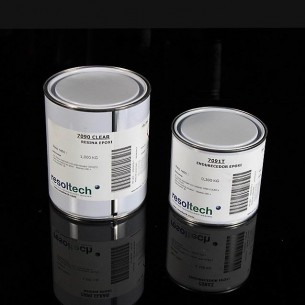
Surface layer · colourless epoxy
Colourless 7090/7091 for creating an epoxy gelcoat surface in composite moulds.
Control film thickness and the mould's thermal cycle. If the process includes prepreg, test the complete system first: adhesion and finish depend on the laminate and cure.
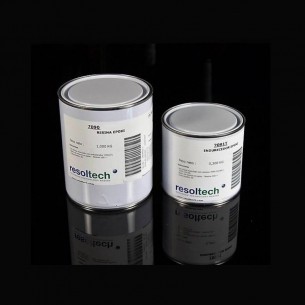
Surface layer · black epoxy
7090 NEGRO/7091T for forming the surface of epoxy moulds where a black finish is required.
Allow for heat curing before demoulding and post-curing of the complete system. The black variant has the same surface role as the other pigmented versions; check its compatibility with the backing.

Surface layer · black brush vinyl ester
15PA(B) gelcoat for forming the surface of glass-fibre-reinforced polyester moulds. This reference is supplied in black 630.
Keep the wet film between 0.4 and 0.6 mm. Before first use, fully cure and prepare the mould surface with a cleaner, sealer and release agent. For heated cycles, allow for post-curing the complete system.
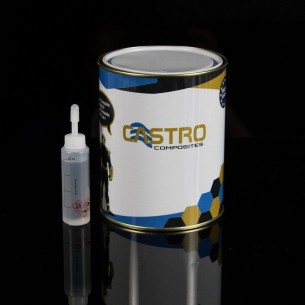
Surface layer · spray-applied vinyl ester
15PA(S) gelcoat for forming the surface of composite moulds by spray application.
Requires spray equipment and even application, avoiding build-up in corners. Before first use, complete curing and prepare the mould surface with a cleaner, sealer and release agent following the specified procedure.
An intermediate layer in the tooling system, distinct from the gelcoat and backing.

Intermediate layer · skincoat
VE679PA forms the first laminate layer of the mould, between the gelcoat and backing. It is red/brown.
This intermediate layer sits between the gelcoat and backing. Plan all three layers and their application times to build the complete mould.
Options for building the reinforced mould body.
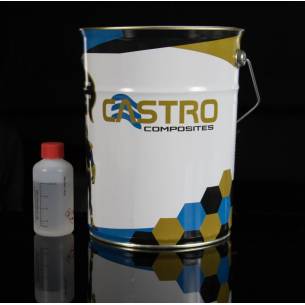
Backing · hand lay-up
Scott Bader 4005PA tooling resin for manufacturing moulds by hand lay-up.
The backing is built with glass-fibre mat. Low shrinkage requires sufficient thickness applied in one operation; it is not achieved with any thin laminate. Also specify a gelcoat and release agent compatible with the complete system.
Backing · hand lay-up
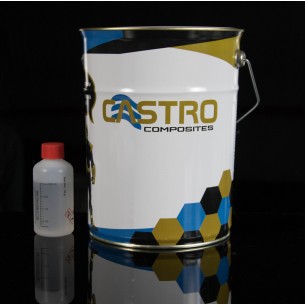
RTR4010PA is a low-shrinkage resin for glass-fibre mould backing. Cream or light brown as a liquid; turns white on curing.
The Crystic mould system combines 15PA gelcoat, VE679PA skincoat and RTR4010PA backing with glass-fibre mat. The thickness laminated in each operation and post-curing determine shrinkage and mould performance.
Crystic 15PA (B) High-Performance Brush Vinyl Ester Tooling Gelcoat Green 2606: A brush-applied 15PA gelcoat option for the mould surface.
Crystic VE679 PA Low-Shrinkage Vinyl Ester-DCPD Resin: Intermediate laminate layer between gelcoat and backing to improve the surface finish.

Backing · epoxy hand lay-up
1040/1041HT system for making prepreg moulds, following the appropriate thermal cycle.
To make the mould, applying 7090/7091T gelcoat first, allowing it to dry and then laminating with 1040/1041HT is recommended. You need equipment to heat the mould before demoulding and complete the post-cure.
Resolcoat 7090 Green / 7091T Epoxy Gelcoat: Gelcoat for the mould surface before applying the epoxy backing.
Backing · epoxy hand lay-up
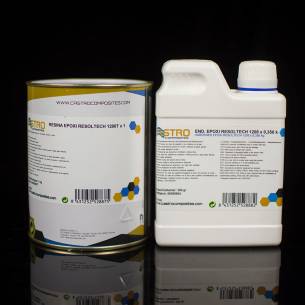
Resoltech 1200 for building mould and tooling backings by hand lay-up with fibre reinforcement.
Match the mould's operating temperature to the chosen system and cure. The standard options for this reference are not equivalent to the specific HT formulations for prepreg tooling.
Low-viscosity systems for closed-mould processing.

Infused mould · polyester
PD9551 resin, with a diffuse yellow colour, for manufacturing low-shrinkage moulds by infusion.
15PA vinyl ester gelcoat is recommended for the mould surface, with a VE679PA skincoat before the infused backing to improve the finish. Low shrinkage depends on curing; add accelerator and catalyst separately, never mixing them directly with each other.
Crystic 15PA (B) High-Performance Brush Vinyl Ester Tooling Gelcoat Green 2606: A brush-applied 15PA gelcoat option for the mould surface.
Crystic VE679 PA Low-Shrinkage Vinyl Ester-DCPD Resin: Intermediate laminate layer between gelcoat and backing to improve the surface finish.
Infused mould · epoxy
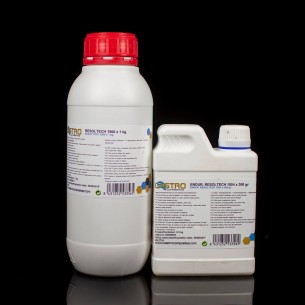
1500 resin for making prepreg moulds by infusion. The 1500/1504 system is used with 7090 gelcoat.
The process requires heating before demoulding and a subsequent post-cure. Consider the mould size and available heating equipment; the documented combination with 7090 gelcoat is 1500/1504.
Resolcoat 7090 Green / 7091T Epoxy Gelcoat: Gelcoat for the mould surface with the 1500/1504 system.
Infused mould · structural epoxy
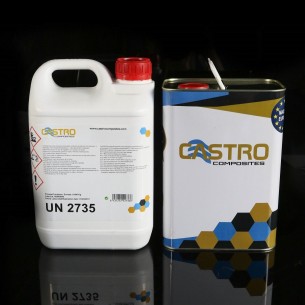
Resoltech 1800 for making composite moulds by infusion, including tooling for prepreg parts.
Allow for initial heating before demoulding and a full post-cure of the tooling. The gelcoat, backing and other materials must withstand the same manufacturing cycle.
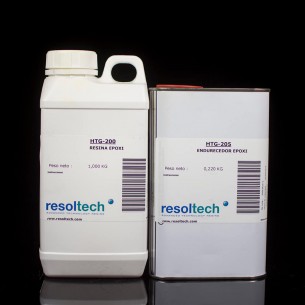
Infused mould · high-temperature epoxy
HTG200/205 for making composite tooling by infusion or injection with demanding thermal requirements.
Check that you have an oven suitable for the complete mould and its post-cure. The initial cure allowing demoulding does not by itself deliver final thermal performance.

Infused mould · HTG160 epoxy
HTG160/165 for manufacturing composite moulds and tooling by infusion or injection.
The mould needs an initial cure before demoulding and a subsequent post-cure to achieve its thermal performance. Check oven capacity and the complete system's resistance to the selected cycle.
An aluminium-filled casting system for patterns and moulds.

Cast tooling · aluminium-filled epoxy
Grey, aluminium-filled 1450ALU/1453 system for casting moulds and patterns.
Plan casting volume and thickness, as well as the post-cure required to achieve final performance. Conditions must suit the size and geometry of the mould.
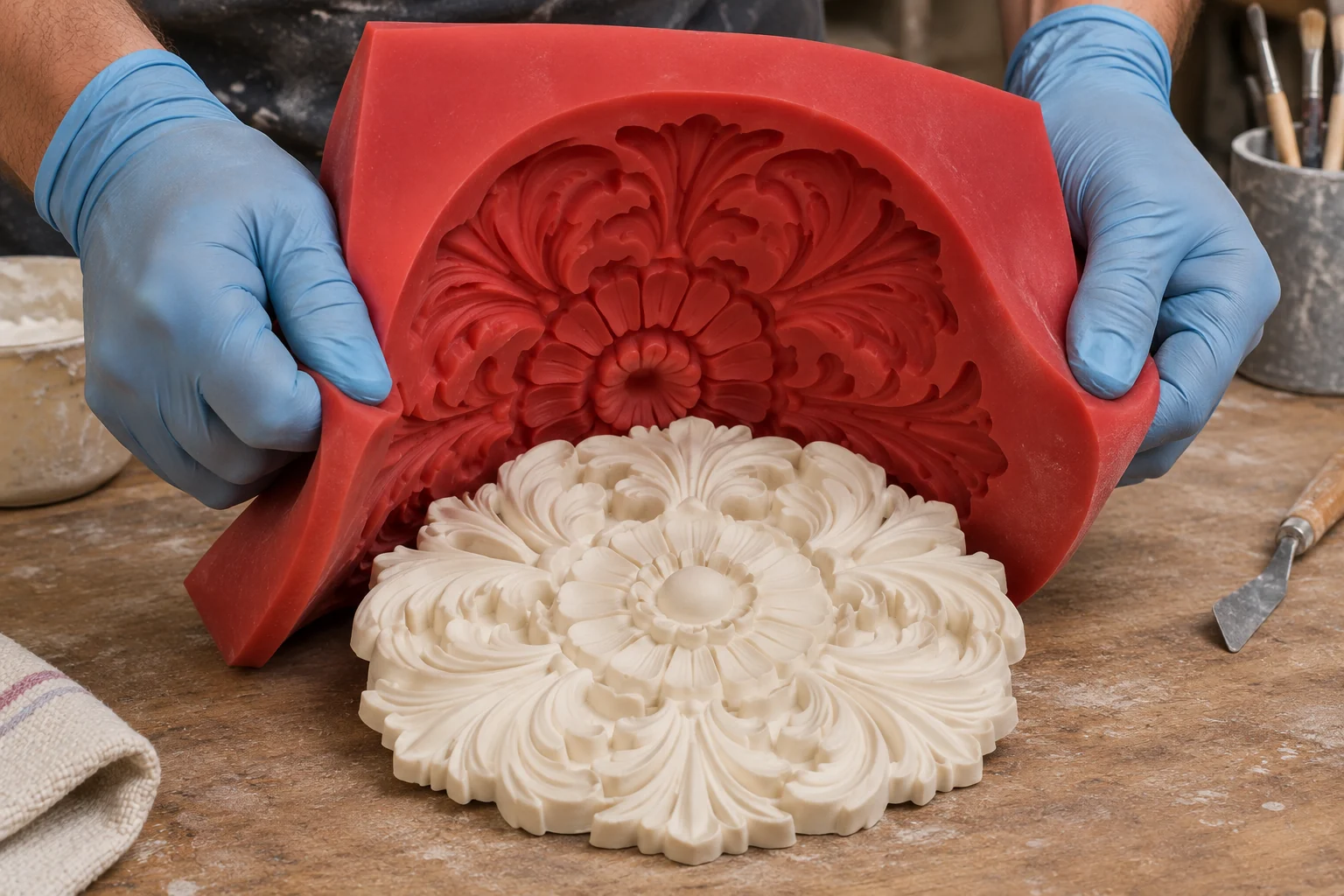
Compare condensation- and addition-cure silicones according to detail, demoulding and the casting material.
3 materials · View application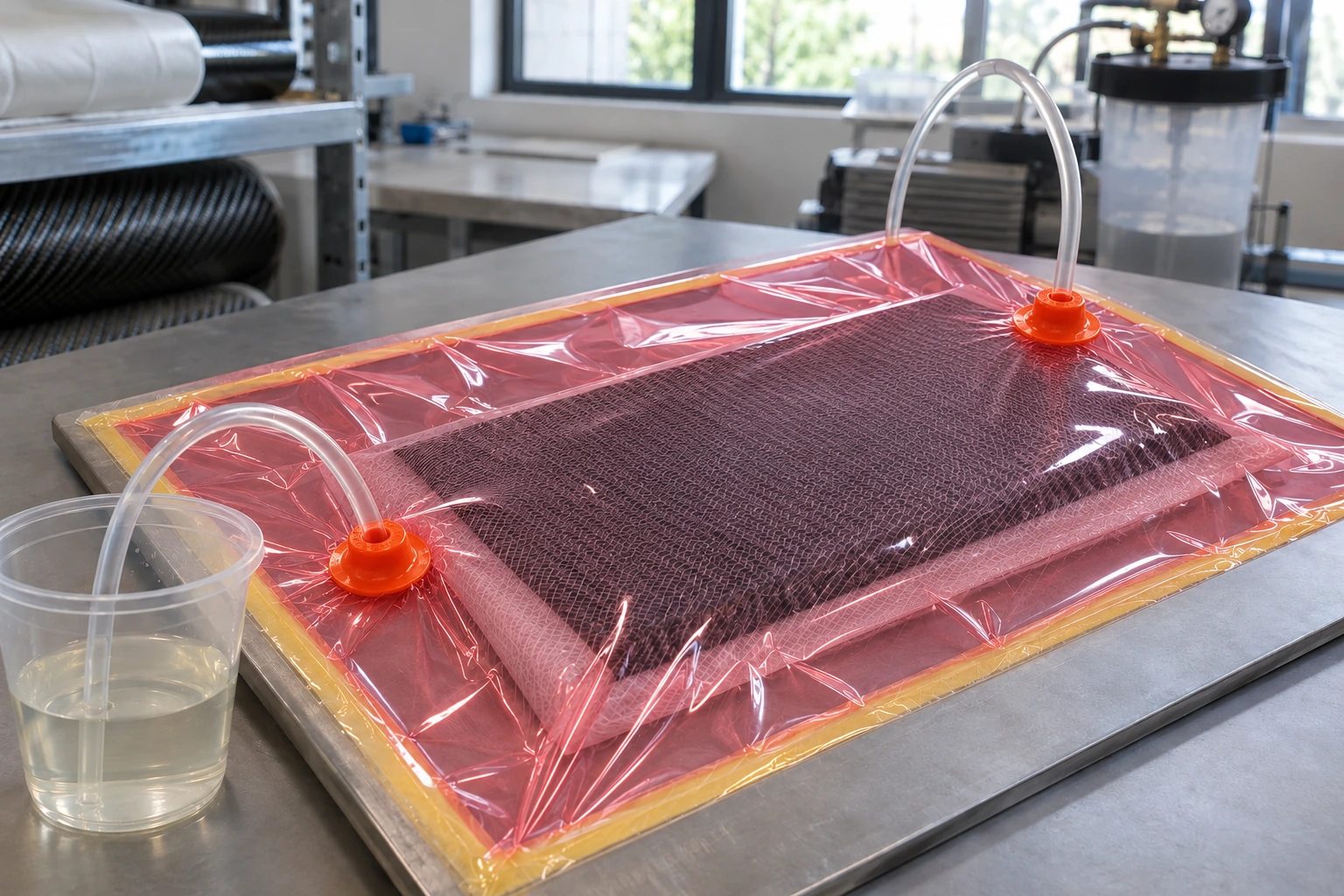
Resins for infusion and injection of composite parts, with options for different processes and service conditions.
11 materials · View application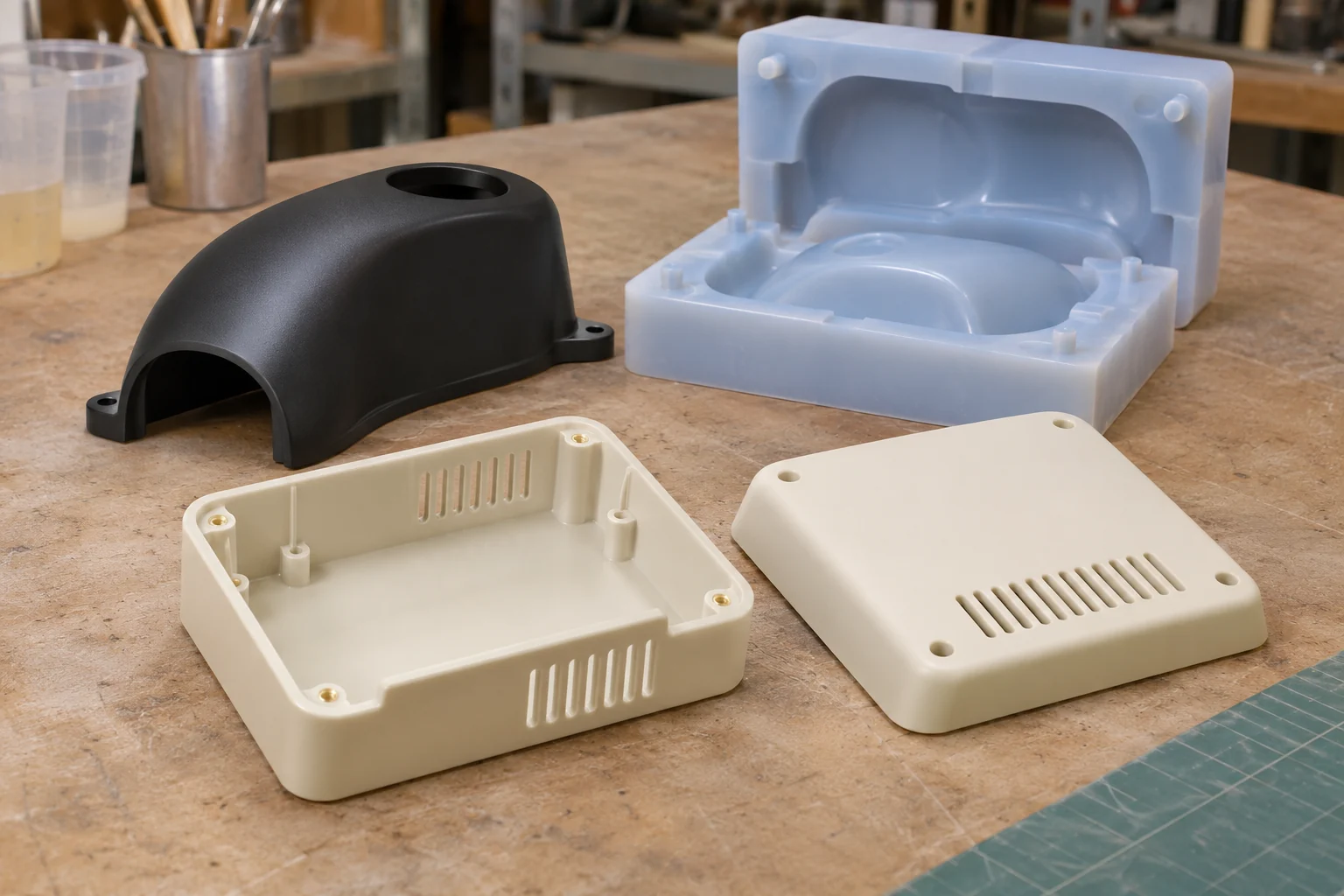
Casting materials for prototypes and rigid parts, distinguishing manual mixing from vacuum casting.
2 materials · View applicationTell us about the process, materials and working conditions.
